Corporate website development for sales, trust and company growth
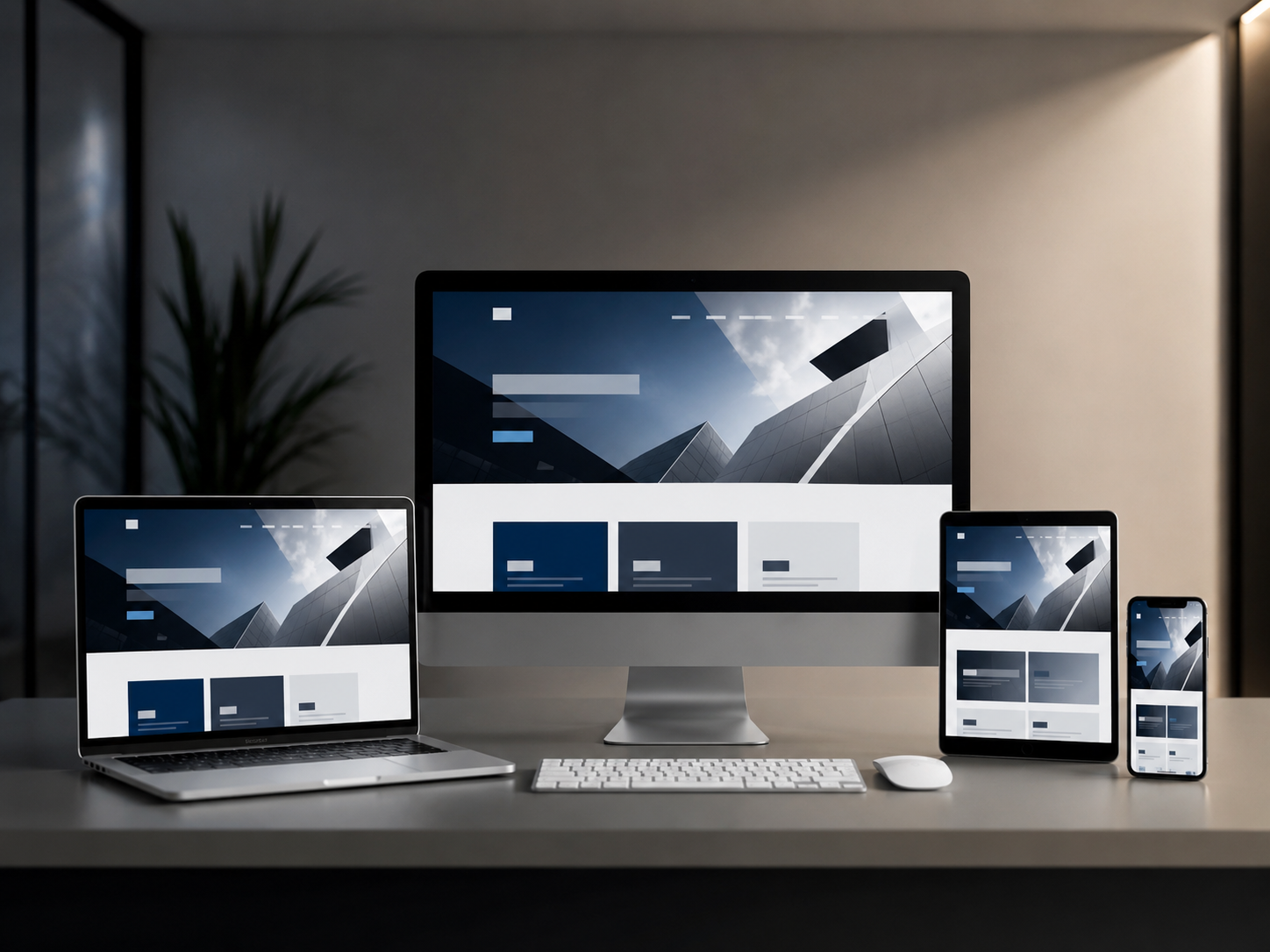
We do not assemble websites from ready-made themes and templates. First we analyse services, audiences and the decision path. Then we create a unique architecture, design and custom code so clients can understand the offer, trust the company and move to contact.
Companies and partners we have worked with







A corporate website connects services, evidence and the path to contact
Seeing a list of directions is not enough. The client needs to understand whether the company solves their problem, why it can be trusted and what to do next. We link services, industries, expertise, cases, knowledge and contacts into one coherent system.
How we design websitesA ready-made theme shows pages, but does not explain a complex offer
A universal template forces the same structure onto companies with different services, audiences and sales cycles. Important directions get lost, evidence sits apart from offers, and visitors do not know where to go next.
Six elements of a corporate website built for the business
The project includes only solutions that help present the offer, support the client’s choice and keep the site manageable after launch.

Site role and audiences
We define which sales task the site supports, who makes the decision and what information each segment needs.

Service architecture and routes
We connect directions, industries, solutions and evidence so visitors quickly find a relevant path.

Content and trust
We shape the structure of messages, facts, team, cases, documents and materials that support the decision.

Custom UX/UI design
We design the interface for the brand, offer complexity and real scenarios — without adapting a ready-made theme.

Custom code and CMS
We build a custom front-end and connect a CMS so the team can update content without breaking the design.

SEO, analytics and QA
We prepare semantic structure, metadata, accessibility, action measurement and technical checks before publication.
We own the site’s role in the business — not a page count
First we check whether the company truly needs new development. Then we connect strategy, content, design, code, SEO and measurement in one agreed project.
We do not use ready-made themes
Architecture, design and front-end are created for the specific company, its services and audiences.
We check whether a new site is needed
If changing the offer, structure or selected sections is enough, we do not sell a full rebuild.
Architecture comes before mockups
First we define page roles and client routes, then we move to visual decisions.

Code follows the task
We do not limit the project to a builder’s capabilities. Needed components and states are built custom.

SEO and AI readiness are built in before launch
We use semantic HTML, accessible content, metadata, internal links and verifiable information.

Language versions are localised
Structure can be shared, but texts, terms, CTAs and evidence are adapted to the language and offer.
Content is part of the system
Design is built around real services, evidence and client questions — not placeholder text.
Control stays with the company
Code, access, CMS, analytics, documentation and growth rules are handed over to the client.
Before development we fix structure, content and launch criteria
Decisions are agreed before they turn into design and code. That reduces rework and helps both sides understand the same result.
Company and route map
We fix services, audiences, page roles, navigation, CTAs and links between key sections.
Content model and fact sources
We define material types, fields, evidence, information owners and the update process.
Technical acceptance criteria
We agree responsiveness, component states, CMS, speed, accessibility, SEO, analytics, migrations, integrations, content ownership and handover.
A corporate website must reflect how clients choose your company
A B2B company, clinic, manufacturer or local business needs different pages, evidence and paths to contact. Architecture follows the real selection process.

B2B company
We explain complex services, project roles, methodology and evidence for several decision participants.

Local business
We connect service directions, service area, specialists, terms and contacts so people can move to an enquiry more easily.
Website for local business
Clinic
We help connect services, specialists, trust and booking without unverified medical claims.

Real estate
We connect properties or services, locations, documents and evidence with a clear path to consultation.
Website for real estate
Manufacturer
We present product lines, technologies, certificates and documentation for clients, dealers and partners.

HoReCa and service
We structure offers, locations, terms, booking and up-to-date information for the visit decision.
Website for HoReCaAgency and professional services
We show specialisations, team, methodology, practice and different entry points for a potential client.
What the company gets after corporate website development
The result is not a set of published pages — it is a manageable digital system that presents the company and supports further growth.
Clear offer architecture
The client sees directions, differences between services and the next step without having to decode the company’s internal structure.
A professional source of trust
Services, team, expertise, cases, documents and knowledge are presented consistently and reinforce each other.
Technical foundation for SEO and AI search
Important pages, facts and entities are available, logically linked and prepared for indexing and verification by search systems.
Control over site growth
The company receives code, CMS, access, analytics, documentation and update rules without vendor lock-in.
Clear rules for custom development
Before start we fix project scope, decision owners, materials, access and how requirement changes are handled.
Project scope is agreed
We define page types, components, languages, integrations, migration and acceptance criteria.
Facts and materials are confirmed by the company
The client approves services, documents, reviews, images, rights and legally significant wording.
Code and access stay with the client
Domains, CMS, analytics, repositories and primary accounts remain under business control.
New requirements are assessed separately
Extra languages, features, integrations and architecture changes are not added automatically after approval.
How corporate website development starts
Five steps from understanding the company to launching a system that can be checked, updated and developed.
01

We understand the business
We clarify services, audiences, sales, languages, the current site, materials and constraints.
02
We design the architecture
We define page roles, navigation, client routes, CTAs and links between key sections.
03
We create content and prototypes
We shape messages, evidence, the content model and key-page logic before visual design.
04
We develop design and code
We create a unique interface and custom front-end, then connect the CMS and agreed integrations.
05
We check, launch and hand over
We run QA, check indexing and analytics, then hand over access, documentation and a growth backlog.
When a corporate website is not the right solution
The format must match the task. Sometimes the business needs one focused page, a catalogue with purchase, or a working system.
Landing page
For one offer, one audience and one priority action.
Landing page developmentOnline store
For catalogue, filters, product pages, availability, payment and order handling.
Online store developmentWeb system
For user roles, data, documents, dashboards and repeatable processes.
Web system developmentAll website formats
To compare landing page, corporate website, store and system.
Compare formatsFirst we will define what role the site should play in the company
Describe services, audiences, the current site and the change you expect. We will check whether you need new development, staged growth or another format.
Questions about corporate website development
What is a corporate website and when is it needed?
It is a multi-page site that systematically presents the company, its services, audiences, expertise, evidence and contacts. It fits when one offer and one page are not enough for a decision.
How does a custom corporate website differ from a ready-made theme?
We do not pick a ready-made design and force the business into it. First we design architecture, content and scenarios, then we create a unique interface and custom front-end for the agreed task.
Is a full rebuild of the existing site always required?
No. First we check the offer, structure, content, code and CMS limits. Sometimes it is enough to change key sections or introduce the new architecture in stages.
What does preparation for SEO, AIO, GEO and LLMO mean?
Code creates the technical foundation: semantic HTML, metadata, accessible content, internal links, structured data and an indexable structure. AI visibility also depends on content quality, entities, evidence and external sources.
Do you use WordPress?
When needed, WordPress is used as a CMS — not as a ready-made theme or design builder. Architecture, interface and front-end are developed custom, and the CMS handles safe content management.
What does the company get and how is the result assessed?
The company gets a working site, code, CMS, access, documentation and analytics. After launch we check technical state, user actions and enquiry quality, but we do not guarantee sales, rankings or a fixed number of leads.